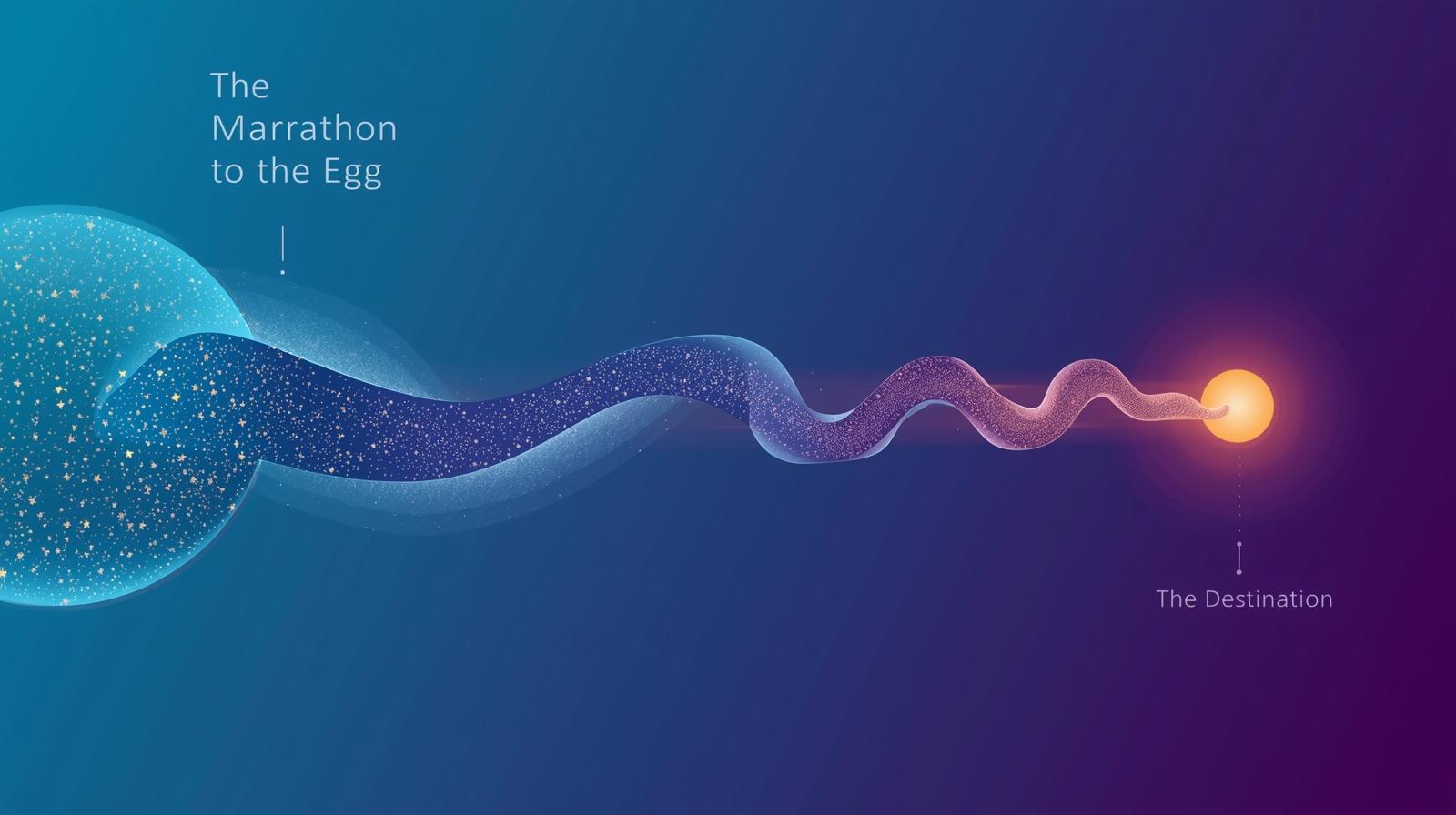
The Sperm's Journey: It Takes Two to Tango
For the past six posts, we've followed the intricate journey of the egg, from its initial development to the preparation of the uterus. But conception is a partnership, and the sperm's journey is equally remarkable and challenging. It's a marathon, not a sprint, where millions start but only one can finish.
While the female body prepares just one egg per month, the male body is constantly producing sperm through a process called spermatogenesis. This process takes about 74 days from start to finish, meaning the sperm involved in conception today began their development over two months ago.
During intercourse, anywhere from 40 million to 300 million sperm are deposited into the vagina. From the moment they arrive, their journey is a race against time and a battle against incredible odds. The first obstacle is the acidic environment of the vagina, which is hostile to sperm. Many don't survive this initial stage.
Those that do must then navigate their way through the cervix. Around the time of ovulation, this journey is made easier. As we learned earlier, high estrogen levels create fertile cervical mucus, which is thin, watery, and alkaline. This special fluid acts like a superhighway, helping to protect the sperm and guide them upward into the uterus.
Once inside the uterus, the sperm continue their journey toward the fallopian tubes. Muscular contractions of the uterus help propel them along, but it's still a long swim. They must choose the correct fallopian tube—the one containing the recently ovulated egg. It's a 50/50 chance, and many will travel up the empty tube.
The few thousand sperm that make it to the correct fallopian tube are the elite swimmers. There, they can wait for the egg for up to five days. When the egg is finally released during ovulation, the sperm undergo a final transformation called capacitation, which enables them to fertilize it. It's the final sprint in a journey that only the strongest and most resilient can complete.

