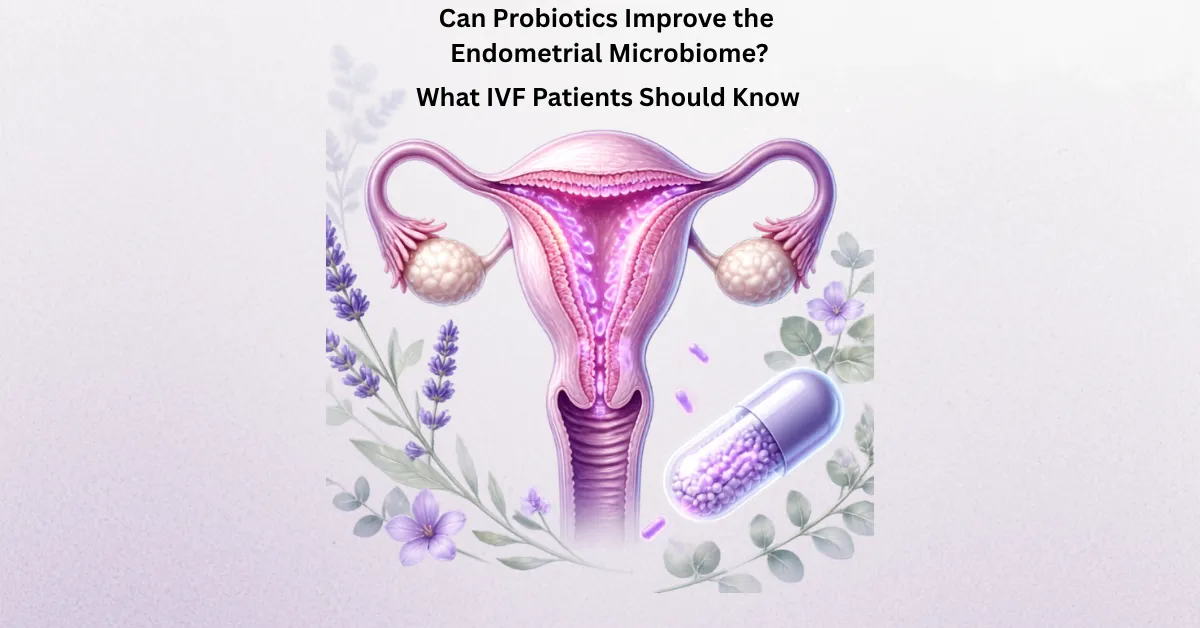
Can Probiotics Really Improve Your Endometrial Microbiome?
Can Probiotics Really Improve Your Endometrial Microbiome?
If you've been researching fertility or preparing for IVF, you've probably come across articles or social media posts suggesting that probiotics can improve the endometrial microbiome. Some even claim they can increase implantation rates and improve IVF success.
But what does the research actually show?
The answer is more nuanced than many headlines suggest.
What Are Probiotics?
Probiotics are live microorganisms that may help support a healthy balance of bacteria in the body. They are commonly associated with digestive health, but researchers are also studying whether certain probiotics may influence the vaginal and endometrial microbiomes.
The goal is often to encourage the growth of beneficial bacteria—especially Lactobacillus species—which are commonly found in a healthy reproductive tract.
Why Are Researchers Interested?
Several studies have found that women with a Lactobacillus-dominant endometrial microbiome may experience higher implantation and pregnancy rates than women with significant bacterial imbalance, also known as dysbiosis.
Because of these findings, researchers are exploring whether probiotics could help restore a healthier microbial environment before embryo transfer.
What Does the Research Say?
At this time, research is encouraging but still limited.
Some small studies suggest probiotics may improve the balance of bacteria in the reproductive tract, while others have found little or no measurable benefit.
Researchers are still trying to answer important questions, including:
Which probiotic strains work best?
What dosage is most effective?
How long should probiotics be taken?
Which patients are most likely to benefit?
Large, well-designed clinical trials are still needed before probiotics can be routinely recommended specifically to improve the endometrial microbiome.
Should Every IVF Patient Take Probiotics?
Not necessarily.
Every fertility journey is unique. While probiotics may benefit some individuals, they are not a proven solution for everyone.
It's important to discuss any supplements with your fertility specialist, especially if you're preparing for IVF or embryo transfer.
The Bottom Line
The endometrial microbiome is an exciting area of fertility research, and probiotics may eventually become part of personalized fertility care. However, current evidence suggests they should be viewed as one potential tool—not a guaranteed treatment.
As research continues, our understanding of the relationship between bacteria, implantation, and pregnancy will continue to evolve.
📘 Want to better understand IVF, fertility testing, hormone monitoring, and the medical terms your fertility team uses?
The IVF Clinical Guide was written to help patients feel informed, confident, and prepared throughout their IVF journey.
🌐 Learn more at: ivfmonitoringlv.com
💬 Have you ever wondered whether probiotics could improve fertility? Share your thoughts or questions in the comments—we'd love to hear from you!
#IVF #IVFSupport #FertilityEducation #EndometrialMicrobiome #Probiotics #FertilityJourney #IVFCommunity #Women'sHealth #IVFClinicalGuide #IVFMonitoringLV