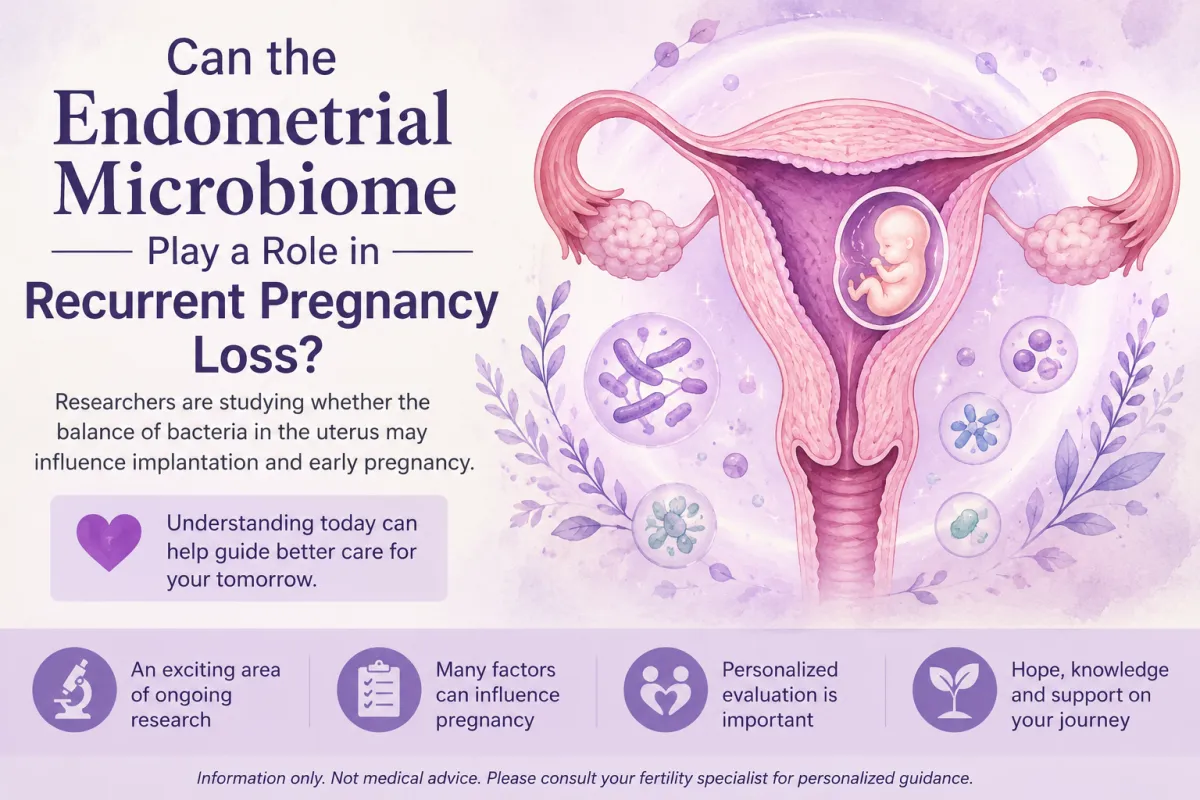
Can the endometrial microbiome influence recurrent pregnancy loss? Learn what research suggests.
Can the Endometrial Microbiome Play a Role in Recurrent Pregnancy Loss?
Experiencing recurrent pregnancy loss (RPL) can be one of the most difficult challenges for individuals and couples hoping to build a family. While many causes of pregnancy loss have been identified, researchers continue to investigate other factors that may influence early pregnancy, including the endometrial microbiome.
Although this field is still developing, scientists are studying whether the balance of bacteria within the uterus may affect the environment needed to support implantation and early embryo development.
What Is Recurrent Pregnancy Loss?
Recurrent pregnancy loss generally refers to two or more pregnancy losses, although the exact definition may vary depending on the medical organization or fertility clinic.
Many different factors may contribute, including:
Chromosomal abnormalities
Uterine abnormalities
Hormonal disorders
Autoimmune conditions
Blood clotting disorders
Unexplained causes
In some cases, no clear explanation is found, which is why researchers continue to explore additional factors.
The Endometrial Microbiome and Pregnancy
The endometrium is the lining of the uterus where an embryo implants. Researchers are investigating whether the types and balance of bacteria in this environment may influence normal implantation and the early stages of pregnancy.
Some studies suggest that a uterus with a higher proportion of beneficial bacteria, particularly Lactobacillus species, may be associated with a healthier uterine environment. However, scientists are still determining how important these findings are in clinical practice.
What Does the Research Show?
Research has identified differences in the endometrial microbiome between some women with recurrent pregnancy loss and those without a history of pregnancy loss.
However, these studies show associations, not proof that changes in the microbiome directly cause pregnancy loss. Larger, well-designed studies are still needed before routine treatment recommendations can be made.
Should You Be Tested?
Testing of the endometrial microbiome is available in some fertility clinics, but it is not currently recommended as a routine test for everyone with recurrent pregnancy loss.
If you have experienced multiple pregnancy losses, discuss your individual situation with your fertility specialist. They can help determine which evaluations are appropriate based on your medical history.
Key Takeaways
Recurrent pregnancy loss has many possible causes.
The endometrial microbiome is an exciting area of ongoing research.
Scientists are studying whether the uterine microbiome may influence early pregnancy.
More research is needed before routine testing or treatment can be recommended.
Work closely with your fertility specialist to determine the most appropriate evaluation and treatment plan.
References
Moreno I, Codoñer FM, Vilella F, et al. Evidence that the endometrial microbiota has an effect on implantation success or failure.
Recent reviews on recurrent pregnancy loss and reproductive microbiome research.