The Command Center
The Command Center: How Your Brain and Ovaries Talk to Each Other
Welcome to our series on the incredible journey of getting pregnant. Before we can dive into ovulation or implantation, we must start where the entire process begins: with a sophisticated conversation between your brain and your ovaries. Think of it as the body's command center orchestrating a monthly miracle.
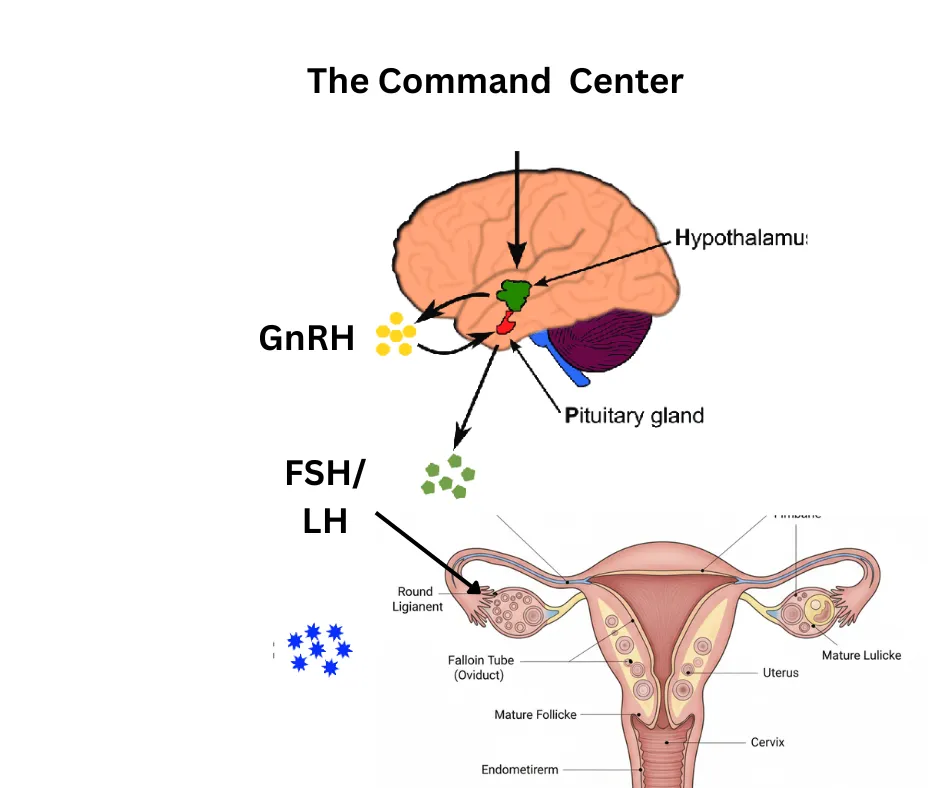
This intricate communication network is known as the Hypothalamic-Pituitary-Ovarian (HPO) axis. It’s a three-part system involving two key areas in your brain—the hypothalamus and the pituitary gland—and your ovaries. These three work in perfect harmony, using hormones as their messengers to manage the menstrual cycle.
It all starts in the hypothalamus, which acts like the mission director. At the beginning of your cycle, it releases a crucial hormone called Gonadotropin-Releasing Hormone (GnRH). GnRH travels a very short distance to the pituitary gland, delivering a simple, direct order: "It's time to get the cycle started."
Receiving this message, the pituitary gland, often called the master gland, springs into action. It responds by releasing two more powerful hormones into your bloodstream: Follicle-Stimulating Hormone (FSH) and Luteinizing Hormone (LH). For now, let's focus on FSH. As its name suggests, FSH travels down to the ovaries with a primary goal: to stimulate the growth of several ovarian follicles. Each follicle is a small, fluid-filled sac in the ovary that contains an immature egg.
This elegant hormonal cascade is the starting gun for your cycle. It’s a beautiful example of how your body works behind the scenes, preparing for a potential pregnancy long before you might even be thinking about it. Without this initial "talk" between the brain and ovaries, the development of an egg wouldn't even begin.
In our next post, we will explore what happens once FSH reaches the ovaries and how it prepares an egg for its big moment.

