The Follicular Phase: Preparing the Perfect Egg
The Follicular Phase: Preparing the Perfect Egg
In our last post, we covered how the brain initiates the menstrual cycle by sending Follicle-Stimulating Hormone (FSH) to the ovaries. Now, let's explore what happens next in the first half of your cycle, a period known as the follicular phase. Think of this as the time your body meticulously prepares an egg for its potential journey.
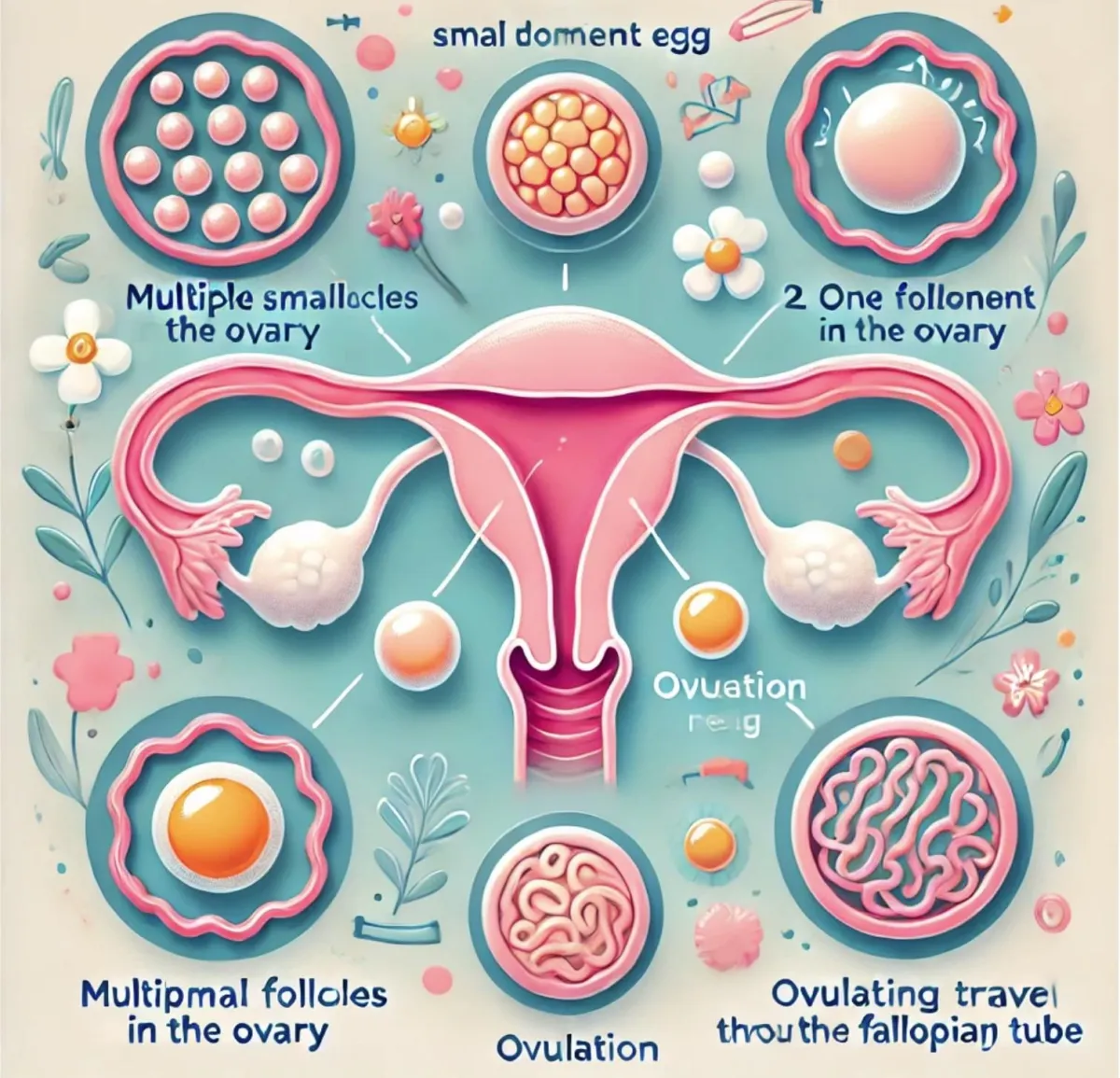
Once FSH arrives at the ovaries, it encourages a group of about 15-20 follicles to begin maturing. Each follicle is a tiny sac containing an immature egg. While several start this race, only one will typically become the "dominant follicle." This lead follicle will continue to grow and mature, while the others will stop growing and be reabsorbed by the body.
As this dominant follicle grows, it begins to produce a very important hormone: estrogen. The rising estrogen levels in your bloodstream have several crucial effects on your body.
First, estrogen acts as a messenger, sending a signal back up to the pituitary gland in the brain. This signal tells the pituitary to stop producing so much FSH. This clever feedback loop ensures that energy is concentrated on maturing just the one dominant follicle, preventing too many from developing at once.
Second, estrogen begins working on your uterus. It signals the uterine lining, known as the endometrium, to start thickening and developing a rich blood supply. We'll cover this in more detail in a future post, but this is the first step in creating a welcoming, nourishing environment for a fertilized egg.
Finally, as ovulation approaches, high estrogen levels are responsible for producing fertile cervical mucus. This special fluid is thin, stretchy, and clear (often compared to egg whites) and creates a sperm-friendly pathway, helping them travel more easily toward the egg.
The follicular phase can vary in length from person to person, but it always ends with the main event: ovulation.

