Ultrasound Monitoring for Your IVF Cycle
LATEST FROM THE IVF EDUCATION BLOG
New IVF research and education explained in language you can understand.
"Expert IVF Ultrasound Monitoring in Las Vegas & Henderson"
⭐⭐ Schedule Your Appointment ⭐⭐
📅 How to Schedule Your IVF Monitoring Appointment
IVF Monitoring LV is conveniently located inside True Health Acupuncture.
When you call, you have reached the correct office.
📞 Call True Health Acupuncture (Home of IVF Monitoring LV)
702-475-0870
Simply tell our receptionist:
"I'm calling to schedule an appointment with IVF Monitoring LV for fertility ultrasound monitoring."
Our team schedules all IVF Monitoring LV appointments and will be happy to assist you.
Prefer to schedule online?
You can also book your appointment through the True Health Acupuncture online scheduling system.
Location
1535 W. Warm Springs Road, Suite 135
Henderson, NV 89014
IVF Ultrasound Monitoring
Follicle Monitoring
Early , 1st,2nd and3rd trimester ultrasounds
Meet Joyce Edwards, RDMS, L.Ac.
With over 45 years of experience in reproductive healthcare, Joyce specializes in fertility ultrasound monitoring and patient education.
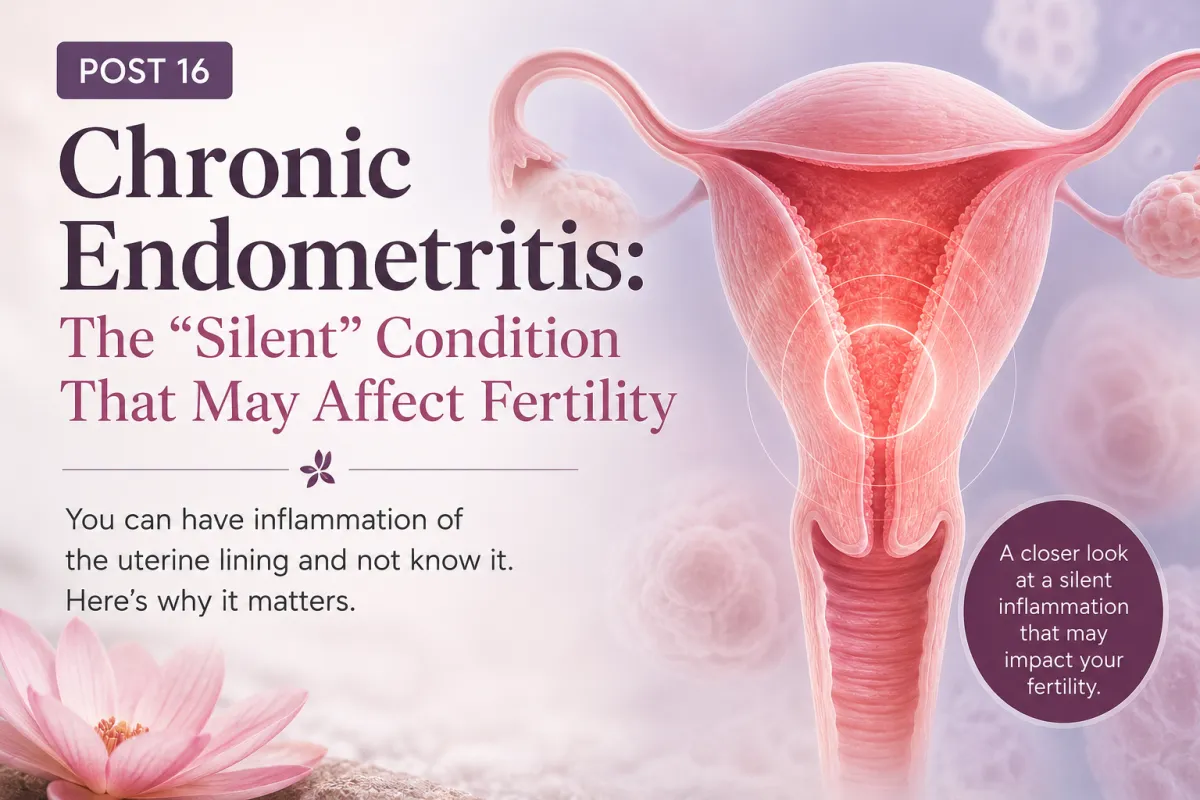
Chronic Endometritis: The “Silent” Condition That May Affect Fertility
Chronic Endometritis: The “Silent” Condition That May Affect Fertility
When you hear the word endometritis, you may imagine an infection that causes fever, significant pain or obvious illness.
But chronic endometritis is different.
Chronic endometritis—often shortened to CE—is persistent inflammation of the endometrium, the tissue lining the inside of the uterus.
And one of the most important things for fertility patients to understand is this:
You can have chronic endometritis without knowing you have it.
CE is frequently asymptomatic or associated with symptoms so mild and nonspecific that they may not immediately suggest a problem with the uterine lining. Recent reviews continue to describe this subtle presentation as one reason CE can be underdiagnosed.
Acute Endometritis and Chronic Endometritis Are Not the Same
Acute endometritis usually behaves more like what we traditionally think of as an infection.
A woman may experience fever, pelvic pain, abnormal discharge or other noticeable symptoms.
Chronic endometritis may be much quieter.
Instead of a sudden illness, there is persistent inflammation within the endometrial tissue. Under the microscope, one of its characteristic findings is the presence of immune cells called plasma cells in the endometrial stroma.
We'll talk much more about how those cells are detected in the next post.
What Symptoms Might Occur?
Some women with CE have no obvious symptoms at all.
When symptoms are present, they can be vague and may include:
Mild pelvic discomfort
Increased or unusual vaginal discharge
Abnormal uterine bleeding or spotting
Other nonspecific pelvic symptoms
None of these symptoms proves that a woman has chronic endometritis. And importantly, not having them does not necessarily rule it out.
That's one reason CE is particularly interesting in reproductive medicine.
Sometimes the Reproductive History Is the Clue
For some women, the reason chronic endometritis is investigated isn't because they feel sick.
Instead, the question arises because of their reproductive history.
Researchers have been studying CE in women experiencing infertility, recurrent pregnancy loss and recurrent implantation failure.
A 2024 systematic review and meta-analysis involving 1,038 women found CE in 19.46% of women with infertility compared with 7.7% of controls.
The difference was even more striking in recurrent pregnancy loss: CE was identified in 37.6% of women with RPL compared with 16.4% of controls.
Those numbers are interesting—but they need to be interpreted carefully.
The same analysis did not find a significant association between CE and recurrent implantation failure.
That's an important reminder that reproductive research rarely gives us a simple yes-or-no answer.
Why Would Inflammation in the Endometrium Matter?
The endometrium isn't simply a surface where an embryo lands.
It is biologically active tissue that undergoes remarkable changes every menstrual cycle in preparation for possible implantation.
Successful implantation requires communication among the embryo, endometrial cells, hormones, immune system and other components of the uterine environment.
Researchers are investigating whether persistent inflammation associated with CE can disturb some of those processes, including endometrial receptivity and embryo implantation.
We still have much to learn about exactly how important CE is—and which fertility patients are most affected.
Why Haven't I Heard About This Before?
Chronic endometritis isn't a brand-new disease.
What's changing is the amount of attention it is receiving in reproductive medicine.
Improved methods of examining endometrial tissue and growing interest in the uterine environment have led researchers to look beyond the embryo alone when trying to understand reproductive failure.
Professional reproductive organizations are paying attention too.
For example, ESHRE's recommendations on recurrent implantation failure recognize that CE can occur without clinical signs of infection and state that assessment for chronic endometritis can be considered in the evaluation of RIF. At the same time, ESHRE emphasizes limitations in the evidence and the lack of standardized diagnostic criteria.
We're going to examine professional guidance much more closely later in this mini-series rather than trying to squeeze it all into this introductory article.
An Important Message for Fertility Patients
If you have experienced infertility or pregnancy loss, this article is not suggesting that chronic endometritis is necessarily the explanation.
There are many possible causes of reproductive difficulties.
Instead, I want you to understand something broader:
Not every reproductive condition produces the classic symptoms we expect.
Sometimes a patient's history is what prompts a reproductive specialist to look more closely.
You don't need to diagnose yourself.
You need enough information to know that a condition exists and to ask your fertility specialist whether it could be relevant in your particular situation.
So How Do We Know If It's There?
That's where things become particularly interesting.
Because CE can be silent, symptoms alone aren't enough to diagnose it.
Doctors can examine a small sample of the endometrium and look for evidence of chronic inflammation—including those plasma cells we mentioned earlier.
And there is a particular laboratory marker called CD138 that you're going to hear much more about.
That's where we'll go next.

Understand IVF With Confidence
In vitro fertilization (IVF) involves a series of complex clinical steps that can be difficult for patients to fully understand while undergoing treatment. This guide provides a clear overview of the physiologic principles, treatment protocols, laboratory processes, and clinical decision points involved in modern IVF care. By translating reproductive endocrinology concepts into accessible language, the book helps patients better understand the procedures and discussions taking place throughout their treatment. It is designed to serve as an educational companion to the care provided by fertility specialists..
Intro Offer · $7
🌸 Join the IVF Monitoring Community
Receive new fertility articles, IVF research updates, and educational resources delivered directly to your inbox.
Testimonials
Michelle A.
My name is Michelle Aukerman. And I just have to say that Joyce at True Health Acupuncture is probably the best ultrasound technician I have ever had in my life and I’ve been through several. She’s very personal and talks through everything and if something goes wrong, she says OK how do we make this right? What’s the next step we need to take? You don’t hear that from any other ultrasound tech, they're so jaded. The comfort environment at True Health Acupuncture is unmatchable. It does not feel like a doctor's office and everybody is so warm but when it comes to Joyce, she is completely unmatched. It’s like having your own mother right there with you. I highly highly recommend her.
Thank you, the Aukerman’s
This is the second pregnancy that I came to Joyce for my outside monitoring. I have been very nervous about the whole process, but Joyce guided me through each and every ultrasound. Although the monitoring went smoothly, upon achieving pregnancy I developed some bleeding. Of course, I panicked. Joyce explained everything that was going on with my bleeding and helped me through this anxious time. I don’t know what I would have done without Joyce’s calm demeanor. And the added bonus is having acupuncture treatment right there at True Health Acupuncture, the office Joyce works out of. I will always be truly thankful for the amazing experience that I received from both Joyce and True Health to be a part of my fertility journey.
Sara P.
Joyce is an exceptional individual who made a significant impact during my IVF journey. I had the privilege of meeting her when I needed support, and she was able to perform ultrasounds when our IVF Dr was unable to accommodate us. Her ability to confirm our twin pregnancy was incredibly reassuring. Joyce took the time to explain everything she was observing, which not only made the experience more memorable but also helped alleviate my anxiety. Her compassionate approach truly made a difference in my experience.

Nicole B
Starting your cycle
Starting an IVF cycle is stressful enough, doing it with an out-of-state provider just increases that stress. That is why we have developed an out-of state monitoring program to help women that need ultrasound monitoring without having to travel to their provider. We follow your physicians instructions and with be able to accommodate your schedule. Most all cycles, whether retrievals or transfers, will need 2-3 ultrasounds during that cycle. All reports can be faxed or emailed to your physician within 2-3 hours after the exam is finished.
📩 Contact Joyce at IVF Monitoring LV
Have questions about fertility monitoring, IVF, or our educational resources? Choose the option that's most convenient for you.
💬 Quick question?
Text Joyce
📩 Need a detailed response?
Complete the contact form below.
📧 Want ongoing fertility education?
Join the IVF Monitoring Community.


